
Concrete Foundations South Yorkshire
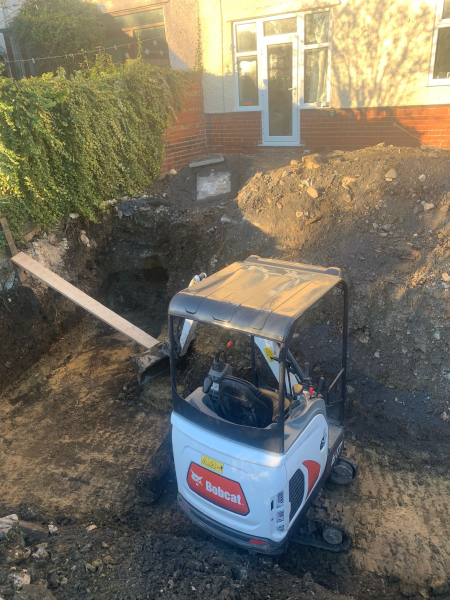
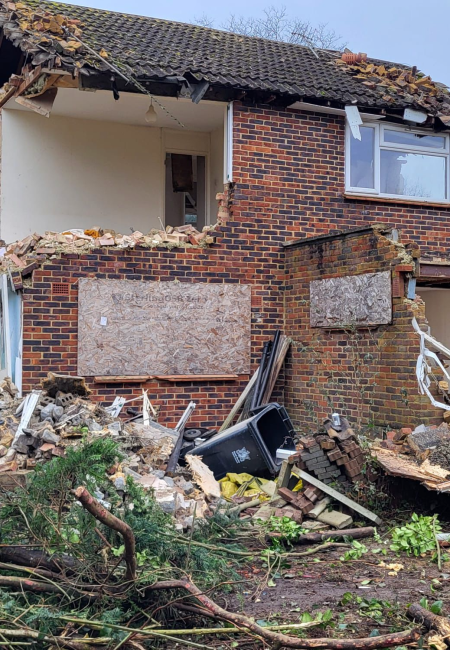
Concrete Foundations South Yorkshire – Strength Beneath Every Structure!
A stronger structure needs a solid foundation, which is the result of properly laid concrete foundations South Yorkshire by professional contractors. Whether you’re extending your property or making new construction in the city, the right foundation is required for foremost safety, durability, and structural confidence. The precise groundwork is crucial that we take care of at Ogden Excavations. Our skilled team is well-versed and trained to form the right concrete foundation South Yorkshire using the best technique. Get ready to build a stronger, durable building with us!
The Types of Concrete Foundations Explained
Projects in South Yorkshire using concrete foundations South Yorkshire must not imply a solitary solution for the area. The appropriate foundation will be determined by the height and size of the buildings, the soil type, the drainage, the loads, and other environmental parameters.
Here are the foundation types that are most commonly used in the area:
- Strip Foundations
Strip foundations are the first choice for domestic properties. They are concrete strips that continuously support the weight of the walls.
Best for:
- Residential buildings
- Additions
- Buildings up to medium weight
Benefits:
- Money-saving
- Fast installation
- Suitable for most ground conditions
- Trench Fill Foundations
The trench is filled with concrete almost completely, instead of blockwork being built up. This cuts down on labor and speeds up the construction.
Best for:
- Locations with poor soil
- Construction projects that require deeper foundations
Benefits:
- Quickly setting up
- Little bricklaying
- Strong
- Raft Foundations
A raft is a big slab of concrete that distributes the weight of the building over the land area.
Best for:
- Very or unevenly distributed soils
- Big commercial units
- New houses on unstable ground
Benefits:
- Excellent distribution of load
- Perfect for clay or shrinking soils
- Lowers the chance of differential settlement
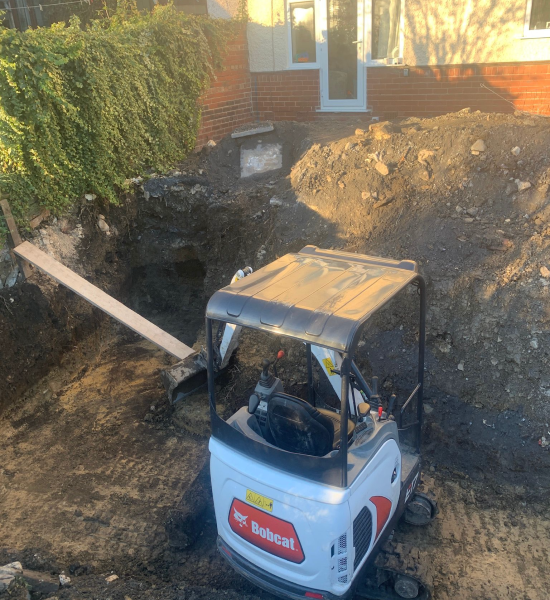
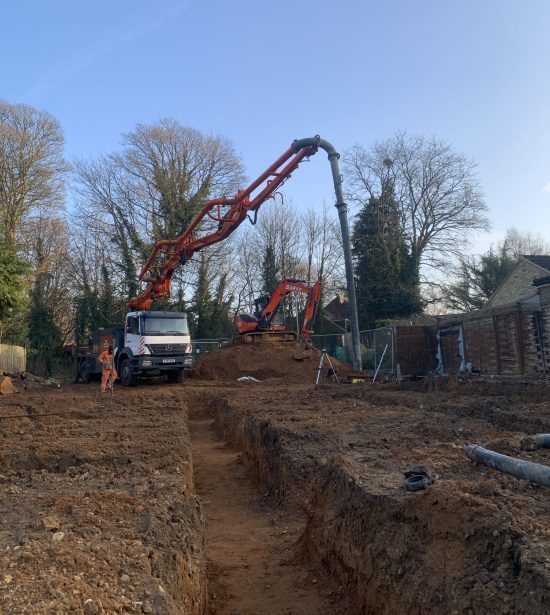
- Pile Foundations
Piling involves driving deep poles that transfer the loads of the building to the layers of soil that are strong enough underneath.
Best suited for:
- Factories
- High-rise buildings
- Difficult soils
Advantages:
- Greatest stability
- Applicable for almost all soils
- Superb for huge constructions
- Concrete Slabs
Usually, they are made for parking spaces, garden offices, workshops, and small buildings.
Best suited for:
- Outbuildings
- Sheds
- Garden rooms
- Modular units
Advantages:
- Smooth and even surface
- Fast installation
- Economical
Why Professional Site Assessments Matter?
Before establishing any concrete foundations South Yorkshire, it is necessary to conduct a thorough assessment. The ground under your building has a more significant impact than most people think.
A proper site assessment consists of:
- Soil Testing: Soil type determines the foundation depth, and types of clay, sand, chalk, peat, and mixed soils act very differently.
- Load Calculations: Foundation size and thickness are directly proportional to the building’s total load.
- Drainage Requirements: Inadequate drainage can damage, and even cause the foundation to sink and become damp.
- Building Regulations Compliance: Standards have been set for the depth, width, and reinforcement of foundations.
This explains why, if you take the assistance of skilled groundwork professionals, it will always be done safely, legally, and correctly.
The Foundation Installation Process - Step-by-Step
For anyone experiencing a building project, knowing what is going on during the process will definitely help. The typical process goes like this:
Step 1: Initial Consultation: Getting to know the project (type of the structure), site location and ground conditions.
Step 2: Site Survey & Ground Investigation: This step consists of surveying the area, soil analysis and planning for the excavation.
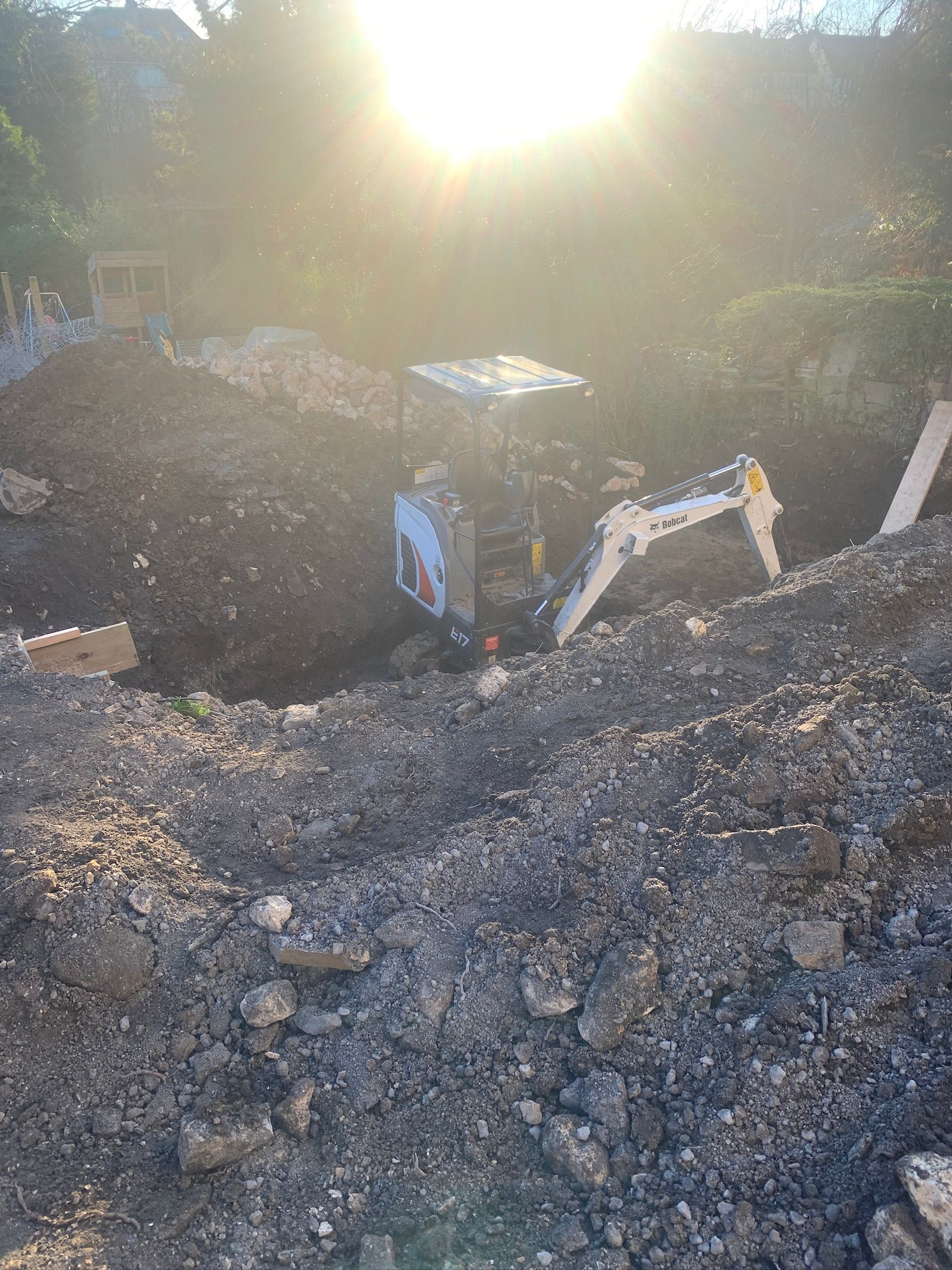
Step 3: Excavation Works: The soil is excavated to the specified depth and width. At this stage, professional excavation is crucial, especially in difficult areas.
Step 4: Formwork & Reinforcement: If needed, steel mesh and formwork are used as foundation support.
Step 5: Pouring the Concrete: The concrete is poured, levelled, and compacted to eliminate air pockets.
Step 6: Setting & Curing: The foundation must be cured properly. It is done to give maximum strength.
Step 7: Quality Checks & Sign-Off: Final inspections are done to make sure all requirements of the building code are met, and the next phase of building is not obstructed.
Common Foundation Problems and How to Avoid Them
Bad foundations can cause costly and time-consuming defects in the future. Below are the most typical problems in South Yorkshire:
- Subsidence: Weak soil or poor drainage is the cause. Strong foundations are the solution.
- Foundation Cracks: Mainly caused by wrong concrete mix, fast curing, or ground movement.
- Water Ingress: Occurs when drainage is neglected during installation.
- Uneven Settlement: Generally, results from inconsistent soil compaction or load distribution are not well done.
The silver lining? All these issues can be prevented by employing duly qualified and skilled groundwork professionals.
What Makes Ogden Excavations the Best Choice?
Though the above details deal with the foundation’s basic general characteristics, their installation presents the main factor deciding the whole project’s fate. At this point, Ogden Excavations proves to be the right partner to work with.
What distinguishes Ogden Excavations is the following:
- Local Knowledge: They are aware of South Yorkshire’s ground types, laws, and frequent building problems.
- The Modern Machinery & Skilled Operators: They have everything from mini diggers to large plant machinery, thus making them ready for any project size.
- Reliable, Accurate Excavations: Nothing is more important than being precise, especially when it comes to the foundation. They have operators who always determine the right depth, width, and levels.
- Bespoke Foundation Solutions: No two sites are alike. Ogden Excavations builds the foundations according to your soil type, structure, and safety requirements.
- Safety & Compliance First: UK regulations and industry standards are the ones that every project overlaps with.
- Transparent Pricing: You are given straightforward and honest estimates with no hidden surprises.
- End-to-End Support: They manage each stage from planning through excavation to concrete pouring without any problem.
Ogden Excavations built the solid foundation of trust with their strong reputation in the region, and they now stand as a reliable name for home and commercial developers seeking success-oriented and dependable results.
Ready To Give Your Project The Rock-Solid Foundation It Deserves?
The right foundations are important for higher strength and safety, whether you are extending your home, constructing a new building, or transforming your property. We at Ogden Excavations are here to help you with the best artisanship, expert excavation, and durable concrete foundations South Yorkshire. If you’re looking for a reliable source for the super-strong concrete foundations, contact us now!
FAQs
How long do concrete foundations take to install?
It takes around a few days to two weeks, depending on foundation size, weather, and soil settlement.
Do I need planning permission before laying foundations?
In most cases, planning permission or control approval for building is necessary, mainly for extensions and new buildings.
What is the best type of foundation for South Yorkshire homes?
Strip foundations are mostly used, but with the clay or unstable soils, raft or trench fill foundations mill work better. An expert evaluation will specify the ideal type.
How deep should concrete foundations be?
The depth of the foundation is determined by the type of soil, the load, and the regulations. Generally, domestic foundations are about 1-1.5 metres deep, but this varies.
Can Ogden Excavations handle both excavation and concrete work?
Yes, they do the complete process from excavation to formwork to concrete pouring, thus ensuring a seamless, safe, and efficient build.